Vaishali Rameshbabu Wins Tokyo Rapid to Open the WR Women's Chess Tour 2026
GM Vaishali Rameshbabu won the Rapid segment of the WR Women's Chess Tour 2026 Tokyo stage, beating IM Alua Nurman 1½–½ in the final on the first day of top-level international chess in Japan.
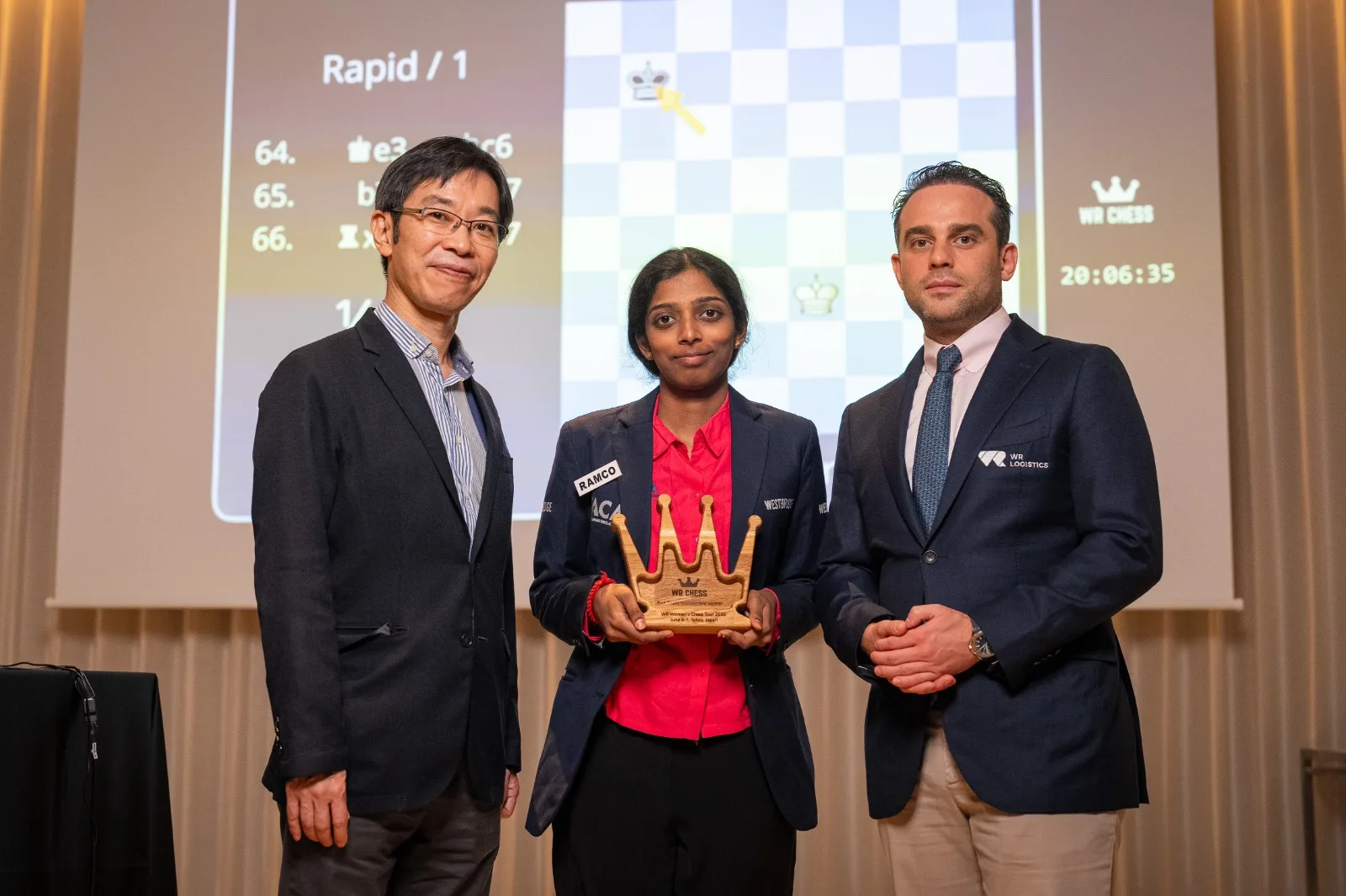
On a day that marked the first time Japan hosts a top-level international chess event, GM Vaishali Rameshbabu of India won the Rapid segment of the WR Women's Chess Tour 2026 Tokyo stage, defeating IM Alua Nurman of Kazakhstan 1½–½ in the final. The 2026 Candidates Tournament winner takes the tournament lead before the Blitz portion on Sunday.
First Time in Japan
The WR Women's Chess Tour is modeled on the WTA tennis circuit, a global knockout series bringing the world's top women players to landmark venues across four continents. In Tokyo, play took place in the Tokyo Toranomon Edition Hotel with a live stream keeping chess fans worldwide up to date via the WR Chess YouTube channel in English, and simultaneously on the Japan Chess Federation's YouTube channel in Japanese.
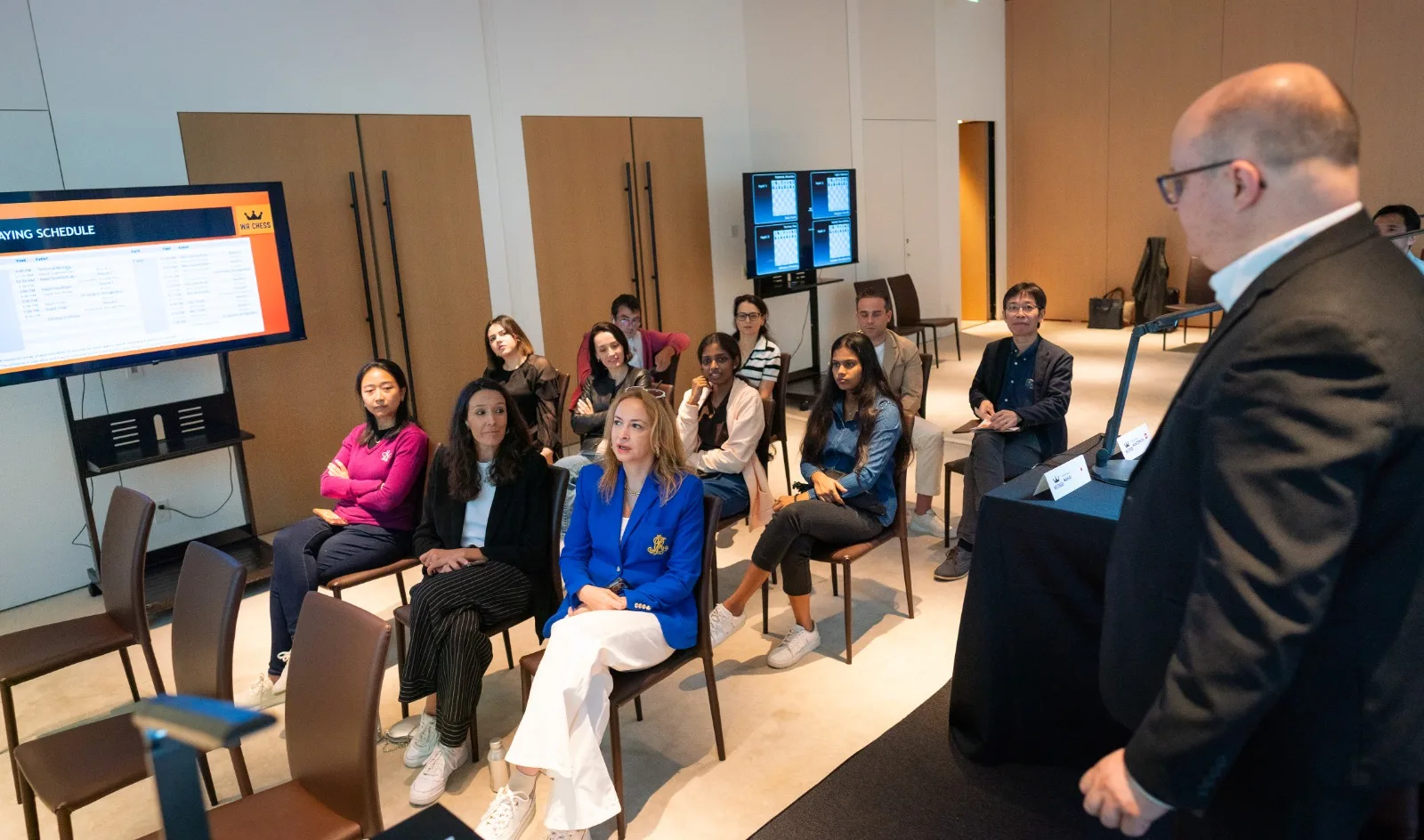
Chief arbiter Gerhard Bertagnolli in the technical meeting with players and organizers.
For many participants, it was their first time in Japan. That included the English commentary team of GM Jan Gustafsson and IM Andras Toth, both on-site alongside WIM Fiona Steil-Antoni, who conducted courtside interviews throughout the day.

Fiona Steil-Antoni enjoying the view.
In the middle of it all: Wadim Rosenstein, playing casual games with a variety of opponents, among them Hiroshi Manabe, president of the Japan Chess Federation. Meanwhile, Chief Arbiter Gerhard Bertagnolli enjoyed a busy day. Apart from his arbiter job, he managed to run a workshop with Japanese arbiters who were glad to receive input from one of the best in the field.
Rosenstein, whose WR Group Holding operates across 70 countries, had outlined his ambition before the tournament: "Chess is immensely popular in some Asian countries, such as the Philippines and Indonesia, but still relatively small in Japan. We plan to change that."
Quarterfinals: Two Easy, Two Tight
The draw was clear-cut in two of four matches. GM Alexandra Kosteniuk dispatched local wild card WCM Azumi Sakai 2–0, and IM Nurman eliminated GM Antoaneta Stefanova by the same margin. The other two quarterfinals were tighter.
IM Irine Sukandar, who had traveled from Washington with little preparation, held Vaishali to a draw in game one. "It was not easy," Vaishali said afterward. "I couldn't find a clear way of converting. She defended very well." The second game was decisive, a trapped knight settled it. 1½–½, Vaishali advanced.
In the fourth quarterfinal, IM Anna Sargsyan and GM Kateryna Lagno drew the first two games before heading to Armageddon. The decider ended in a draw as well. In Armageddon, a draw is sufficient for Black, and Lagno, playing Black, advanced.
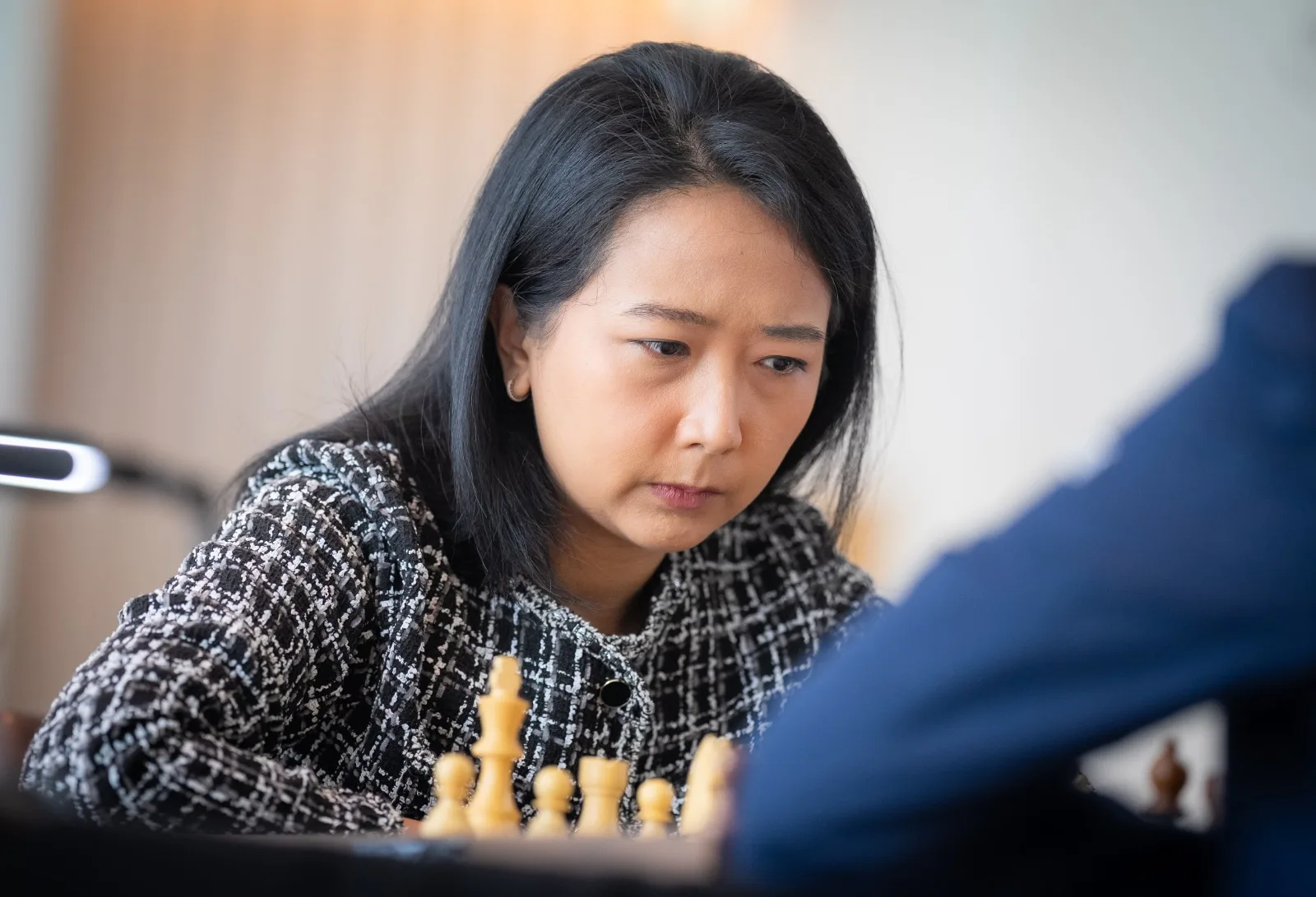
Irine Sukandar was gracious in defeat.
Sukandar, who these days focuses largely on chess media and rarely plays competitively, had her husband IM Eric Rosen at her side. She was gracious in defeat. "It feels great to be back at the board in competitive chess again," she said and emphasized the "unique opportunity to be here". According to Sukandar, it is important to have an event like this in the growing chess continent of Asia.
Sakai, the only Japanese player in the field, faced a tough challenge in a field of world class players. A physicist by training, the 2023 Japanese Women's Champion and Olympiad representative was outgunned by Kosteniuk on the board. But her presence mattered. This is Japanese chess on the big stage, and she was its representative.
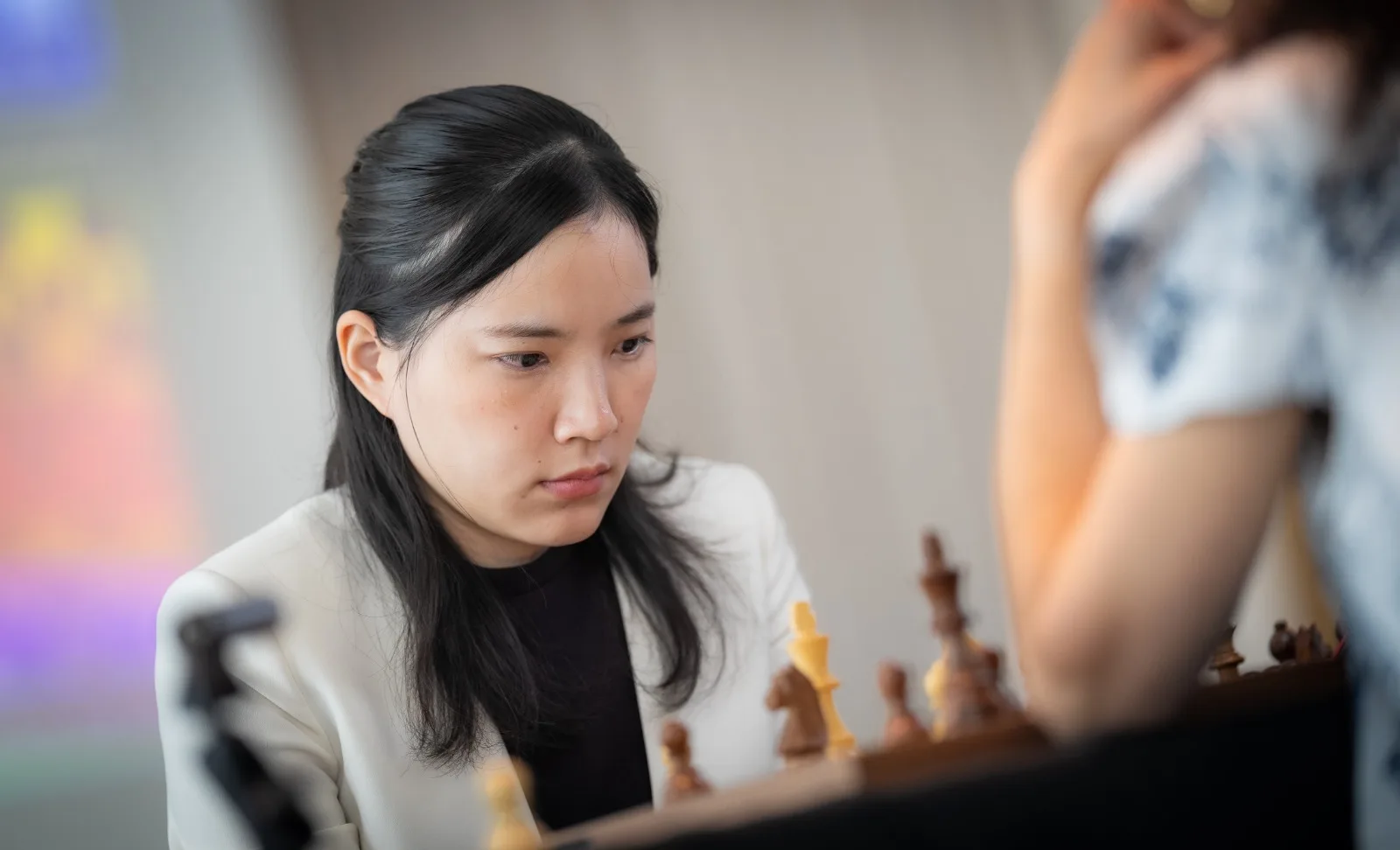
Azumi Sakai, invited as the local player.
Semifinals: Vaishali's Queen Move
After a draw in the first semifinal game between Vaishali and Kosteniuk, game two delighted the audience on the screens with a spectacular finish. With less than 30 seconds on her clock, Vaishali crashed her queen into the pawn wall in front of the black king with 20.Qxh6 — a pseudo-sacrifice that turned out to be the decisive moment of the match. White wins material outright, Vaishali advanced to the final 1½–½.
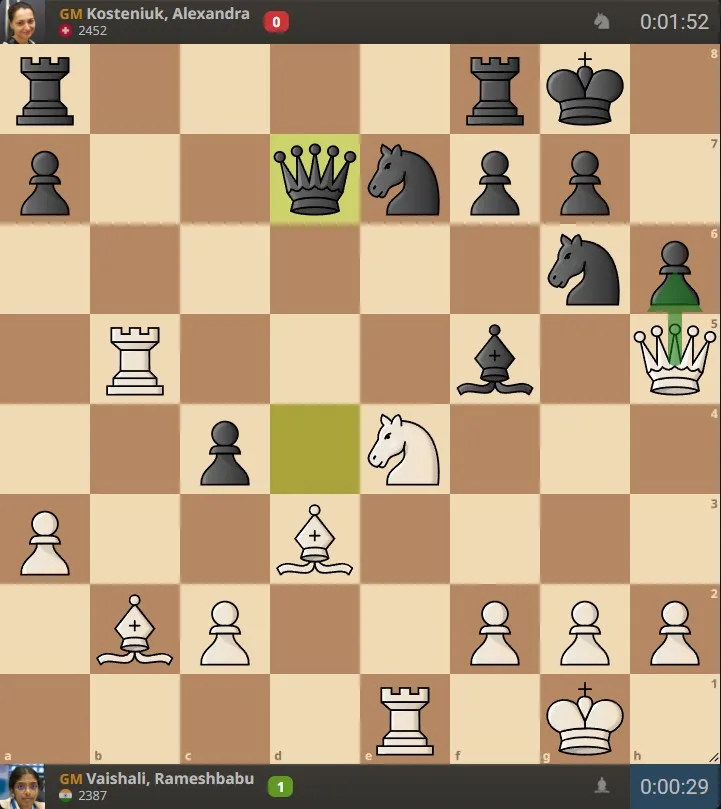
Move of the day: Vaishali's 20.Qxh6 in the second semifinal game.
In the other semifinal, Nurman beat Lagno 1½–½. The Kazakh had prepared a specific Italian line for the tournament and deployed it in the second game to crushing effect. "I was very happy with my position and was constantly improving it until she blundered," she said after the game. So absorbed had she been in this struggle that she hadn't even noticed Vaishali winning the other semifinal. When told she would face the Candidates winner in the final, she recognized the magnitude of this challenge: "I will try my best," Nurman said.
The Final: A Pawn Offered, a Tournament Won
The final was opened with a ceremonial first move by Madoka Kitao, a professional shogi player. A fitting image: Japan's prominent female mind-sports professional starting the decisive game of the first top-level chess event ever held in the country.
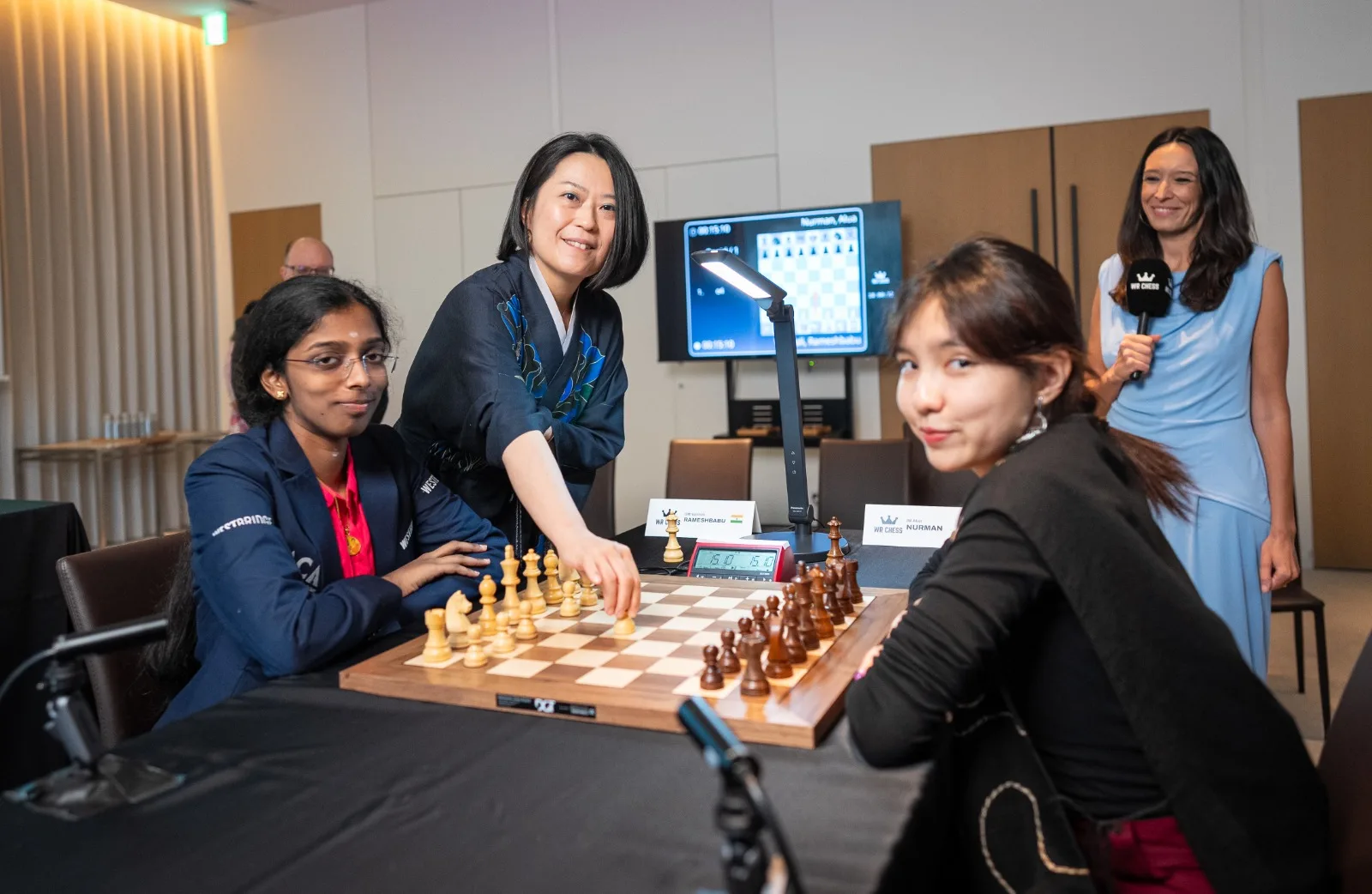
Madoka Kitao arrived in a kimono to open the final between Vaishali (left) and Nurman.
Vaishali offered a pawn sacrifice on move 7 to open up Nurman's king. Still, the objectively best response was to take the pawn. Nurman declined the offer. "In hindsight, the game was decided when Black didn't take it," Gustafsson later said from the commentary desk.
Vaishali pressed her structural and activity advantage without mercy. Nurman never managed to free her pieces or bring her king to safety. Game 1 to Vaishali.
Game 2 was a different story. Nurman, now needing a win to force Armageddon, played for a structural edge and found one. The isolated c-pawn on Vaishali's side gave her something to press against. The game reached a double rook endgame with Nurman's pieces more active. "Vaishali may have been too eager to exchange everything," Gustafsson noted. "Now she pays the price."
However, Nurman missed her moment to convert. Vaishali, under pressure throughout, held the draw. Match result: 1½–½ to Vaishali. Tokyo Rapid title secured.
Between Rounds: Chess Meets Shogi
Before the final, a different mind sport was played next door. Players and organizers gathered for a shogi workshop hosted by Madoka Kitao. Shogi sets and instruction sheets covered the table. Rosenstein was there too, learning the game alongside Kosteniuk, both of them away from the chess board for an hour. Kitao, who has spent years promoting shogi internationally and runs Komadoya, a specialty board game store, brought the players into direct contact with Japan's own deep board game tradition.
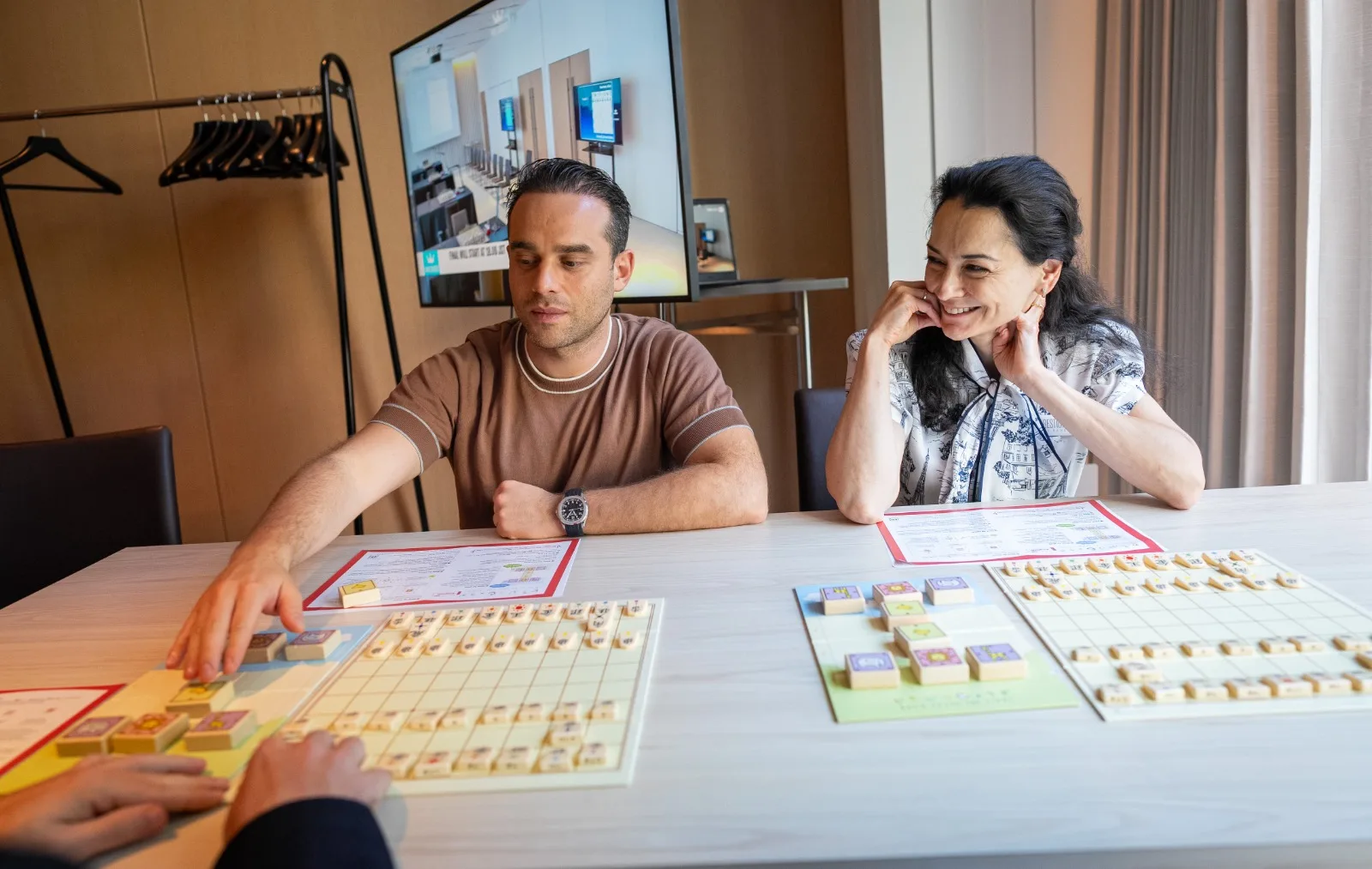
Rosenstein and Kosteniuk during the shogi workshop.
Standings and What Comes Next
With the Rapid complete, the tournament standings after Day 1 read:
- Vaishali — 10 pts
- Nurman — 8 pts
- Kosteniuk — 5 pts
- Lagno — 5 pts
- Stefanova, Sargsyan, Sukandar, Sakai — 2 pts each
The same number of points will be at stake in the Blitz on June 7. Nurman, two points behind, has every reason to come back hard. Vaishali, for her part, arrives at the Blitz as the Rapid champion. Meanwhile, former World Champion Stefanova will want to live up to her reputation as a feared blitz specialist.
Day 2 starts at 11:00 JST.