Magnus Carlsen Wins Inaugural ASEAN E-Sports Chess Cup in Bangkok
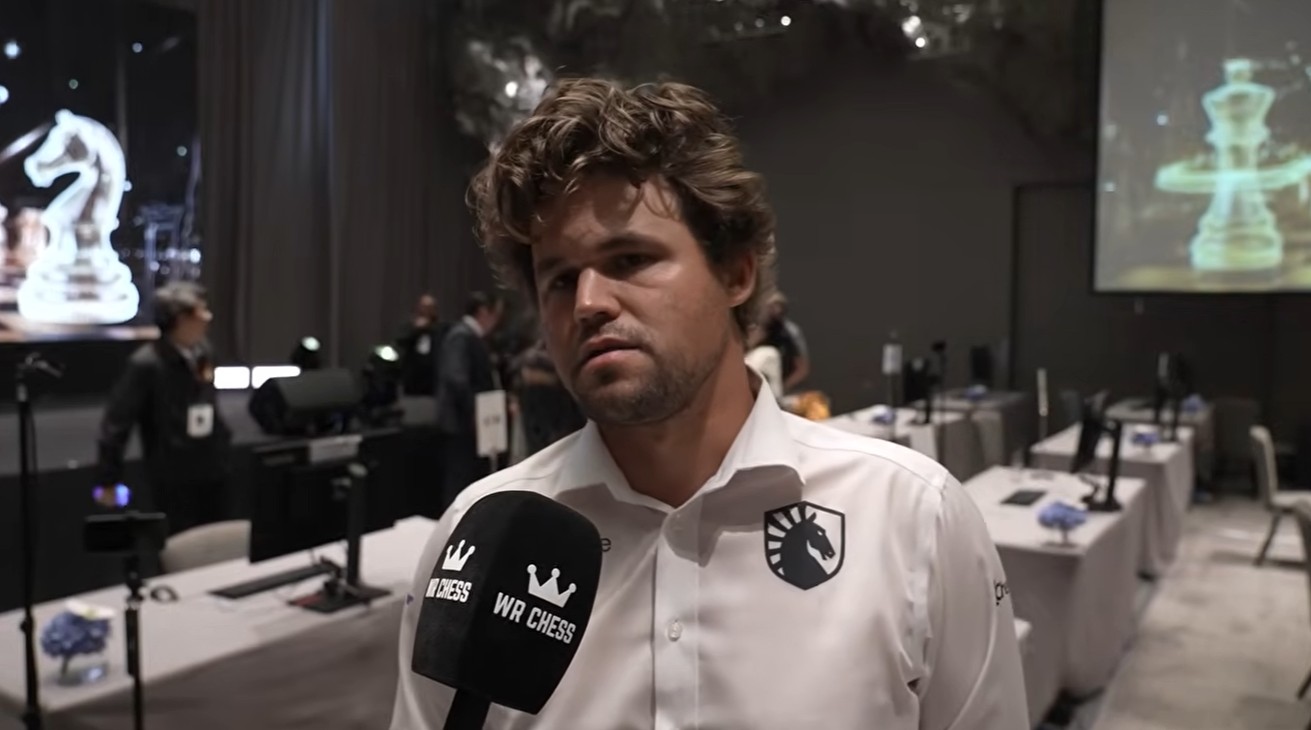
Magnus Carlsen arrived in Bangkok looking, by his own admission, less than fully energized. "A little bit tired, not feeling my most energetic," he told interviewer Fiona Steil-Antoni during the competition. His former trainer Jan Gustafsson had noticed it from the commentary desk — but was unsurprised. Carlsen, he observed, sometimes takes time to find his rhythm. When the moment demands it, though, he delivers. And so he did this time. When the final Armageddon game was over, the world number one had won the inaugural ASEAN E-Sports Chess Cup 2026.
A First for Southeast Asia
The event itself was a first of its kind for Southeast Asia. Organized by the Thailand Chess Association in partnership with WR Chess, the ASEAN E-Sports Chess Cup brought 22 players to the Grand Ballroom of the Four Seasons Hotel Bangkok at Chao Phraya River for a single day of rapid chess: groups in the morning, knockout from the quarterfinals onward in the afternoon.
WR Chess founder Wadim Rosenstein attended alongside former Thai Minister of Higher Education Supamas Isarabhakdi, whose presence underlined the tournament's ambition to position chess as part of Thailand's growing esports landscape. "For Thailand, esports represents an important opportunity," Rosenstein said, thanking the Chess Association of Thailand and its president Sahapol Nakvanich for their partnership.
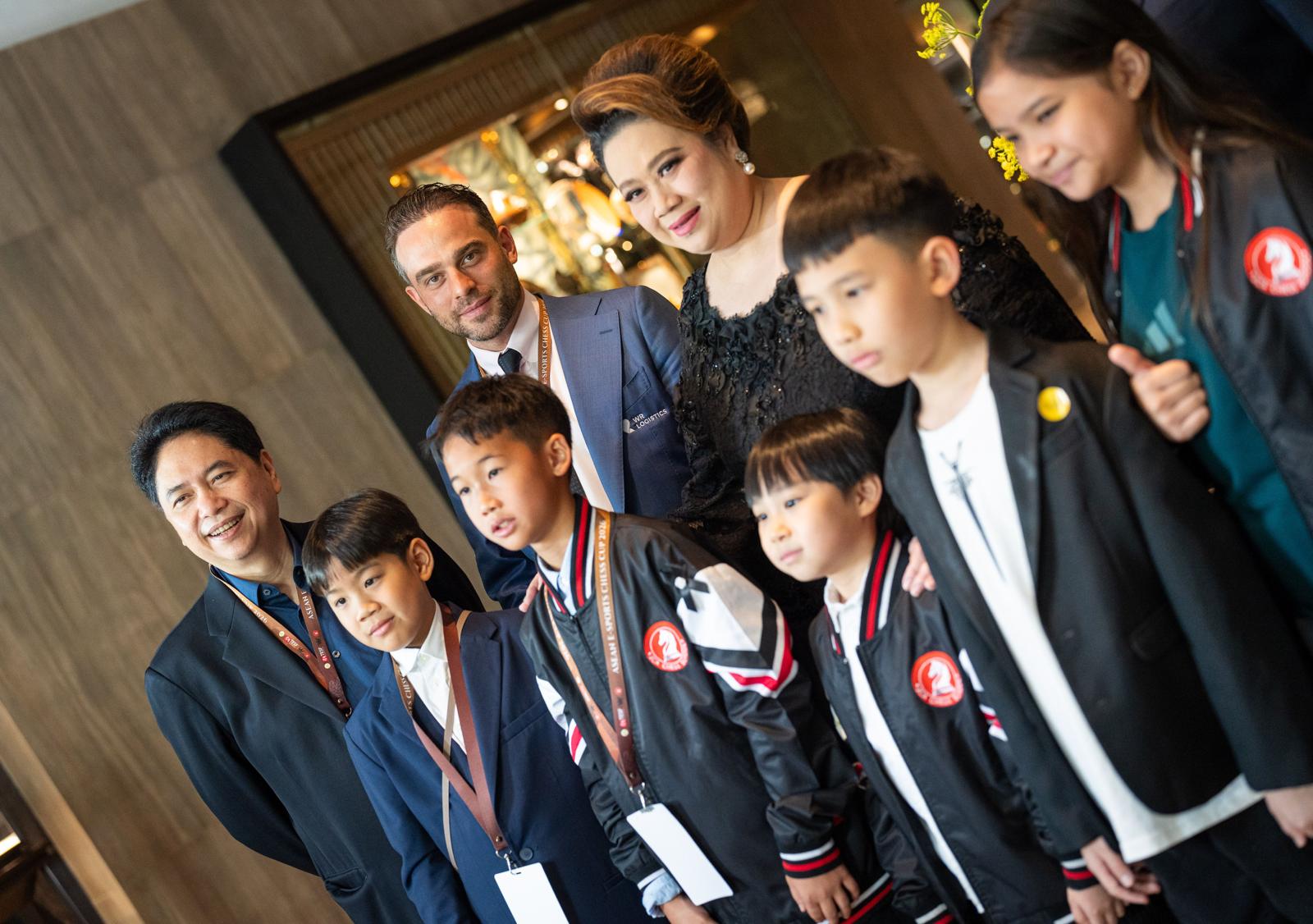
Wadim Rosenstein next to Supamas Isarabhakdi. | Photo: Lennart Ootes/WR Chess
Upsets in the Groups
The 22 players were split into four groups, with the top two from each advancing to the quarterfinals. The group stage produced two results that will be talked about long after the day is done. Ten-year-old Thai prodigy Pakornnarong Liukasemsarn defeated Andrey Esipenko — a 2026 Candidates Tournament participant and one of the strongest players in the world — in what commentator Sagar Shah flagged as one of the day's standout moments. And Fabiano Caruana, world number two, was eliminated at the group stage, beaten in the final round by Salem A.R. Saleh of the UAE.
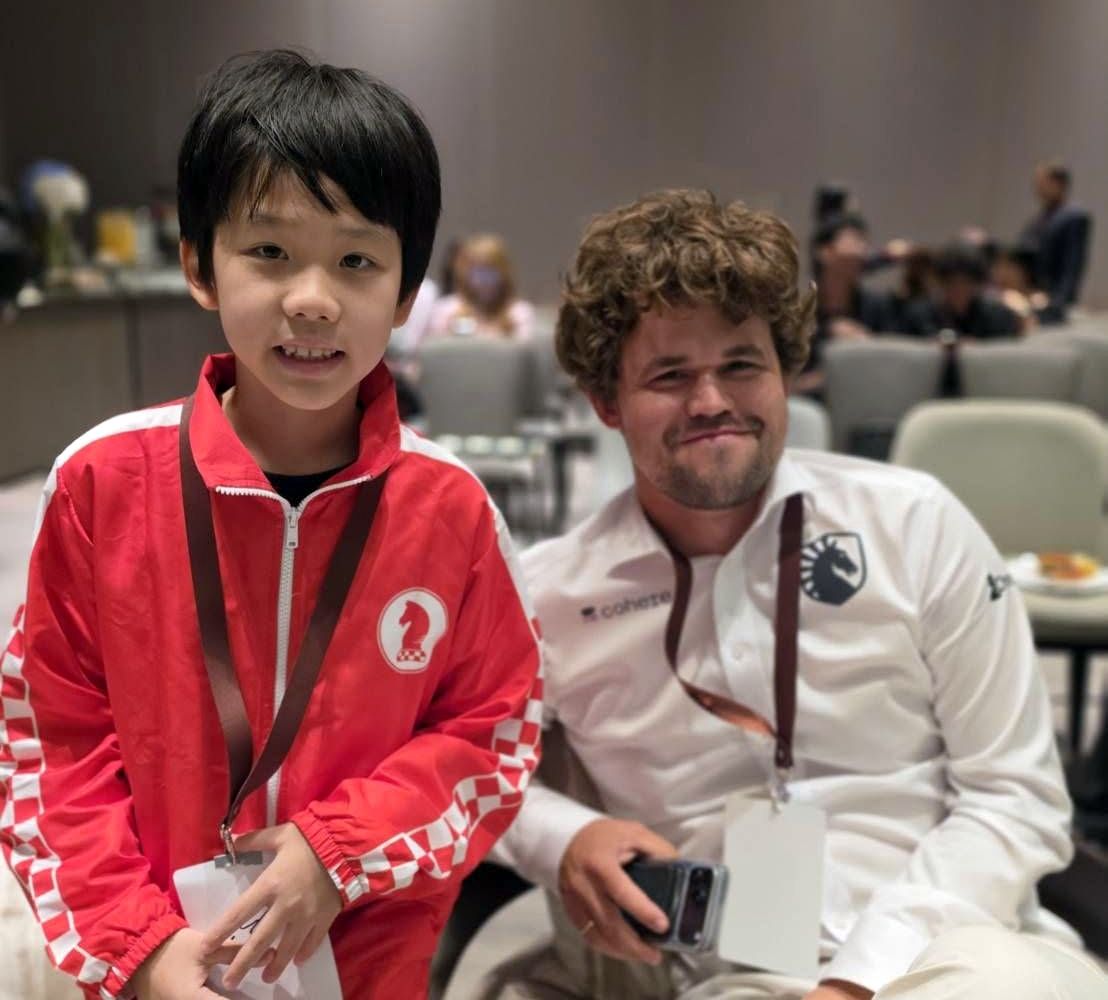
After a win over Andrey Esipenko, Pakornnarong Liukasemsarn ended his chess day posing next to Magnus Carlsen. | Photo: Red Knight Chess Club
The Road to the Final
The quarterfinals set up a knockout stage that Gustafsson called "star-studded." Carlsen swept past Tin Jingyao of Singapore 2–0, while Esipenko edged Amilal Munkhdalai of Mongolia 2–1 in a match that required Armageddon to settle. On the other side of the bracket, Le Quang Liem — Vietnam's former World Blitz Champion — dispatched Megaranto Susanto of Indonesia 1.5–0.5, and José Martínez of Mexico eliminated Salem A.R. Saleh 2–0.
In the semifinals, Carlsen defeated Le Quang Liem 2–0, though the scoreline flattered him. Carlsen had been a pawn down in game one before his opponent erred. The world number one converted with clinical efficiency. Esipenko, meanwhile, beat Martínez by the same margin to set up the final that Gustafsson had been hoping for. "Dream final," he said.
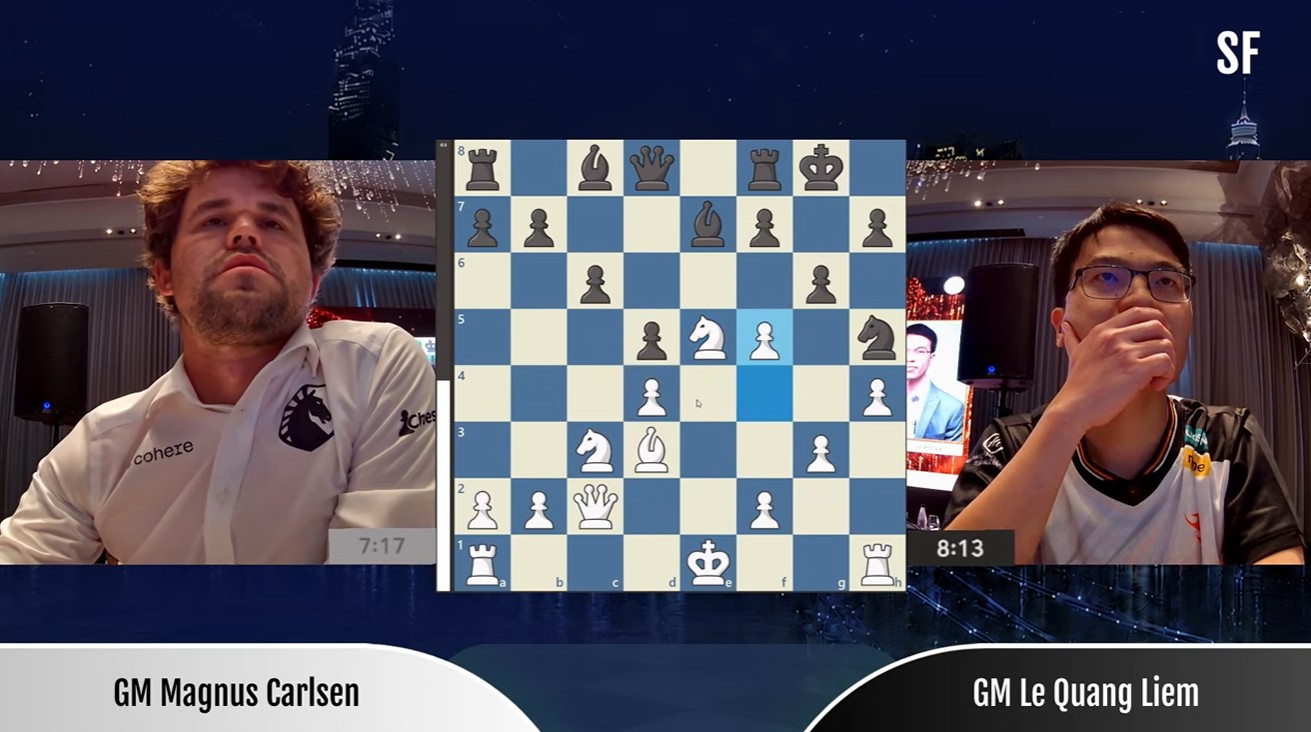
The semifinal between Magnus Carlsen and Le Quang Liem. | Screenshot
Armageddon Decides
The final did not disappoint. Carlsen won game one in a positional grind, but Esipenko hit back in game two with an attacking display that left the world number one's king exposed in the center. Carlsen admitted afterwards he had simply forgotten that Esipenko could castle queenside — "I pretty much had to resign immediately," he said.
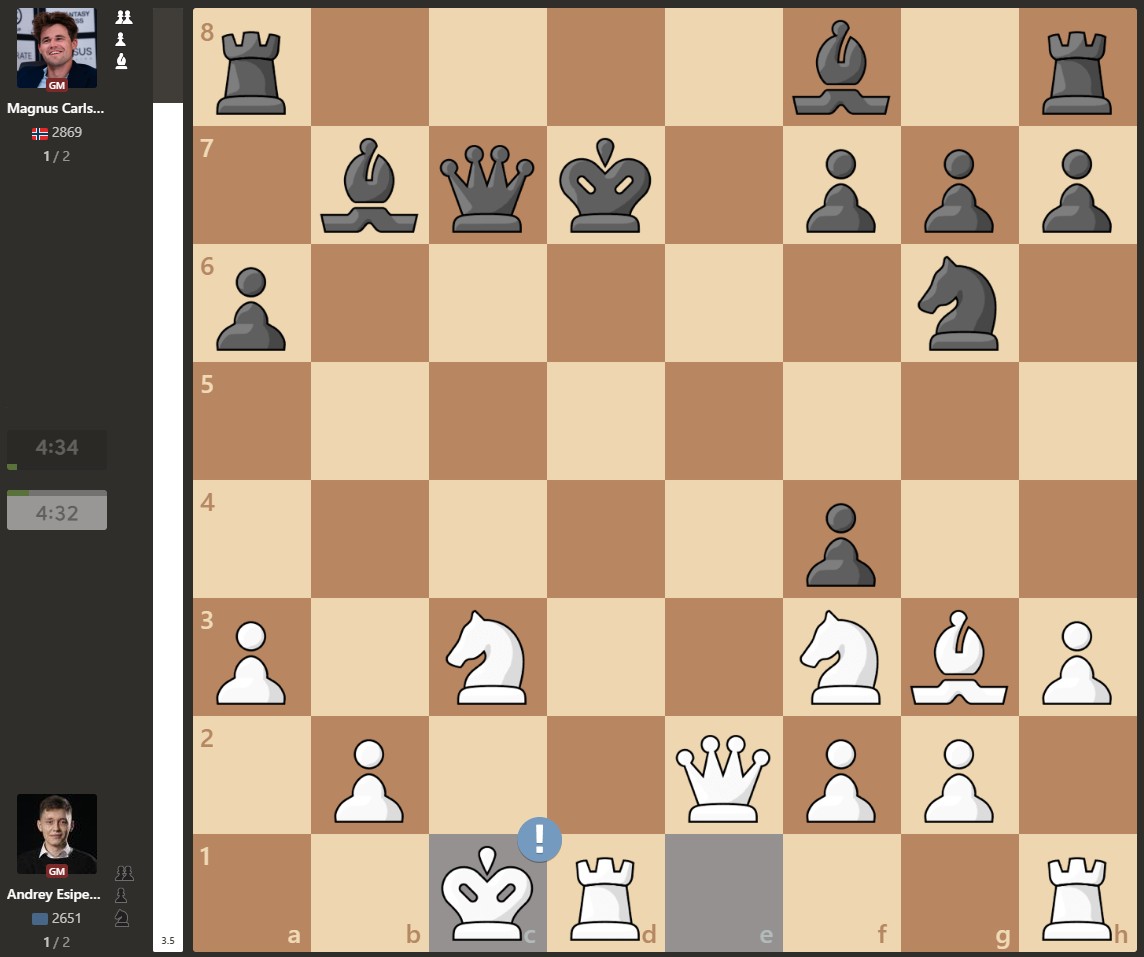
"Forgotten he could castle queenside."
With the match level at 1–1, Armageddon would decide the champion. Carlsen had white, five minutes to Esipenko's four, but a draw would hand the title to his opponent. The Norwegian chose a dry, technical position. Gustafsson wondered aloud whether it was the right call against such a strong endgame technician. It turned out to be. Carlsen outplayed Esipenko in the ending, converting what had looked like very little into a winning advantage.
Le Quang Liem had mentioned earlier that fans in the adjacent room could be heard through the walls during the games. When Carlsen won, they had every reason to make themselves heard. As ever, the world number one was the center of attention, surrounded by fans eager for a selfie.
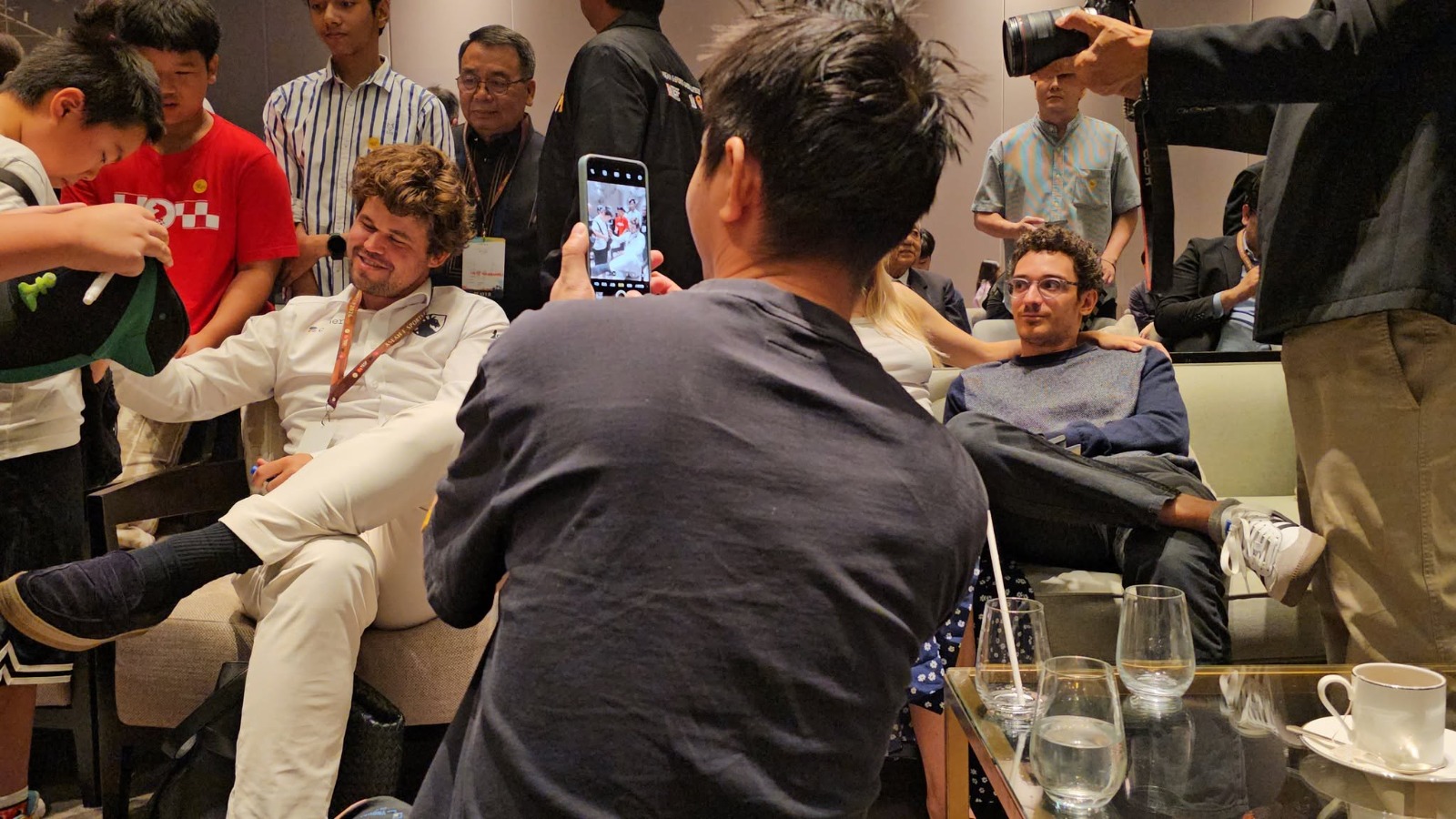
Magnus Carlsen and Fabiano Caruana surrounded by fans. | Photo: ChessBase India
A Format With a Future
For Carlsen, the victory added another esports title to a growing collection — he had won the Esports World Cup the previous summer. For the tournament, the result was almost secondary. Commentators Gustafsson and Shah were united in their enthusiasm for what they had witnessed: a format with real potential, a region warming to the game, and a crowd that had followed every move from the next room.
Kai Tuorila, founder of the Bangkok Chess Club and the man behind the long-running Bangkok Chess Club Open — which has grown from its first edition in 2002 to attract 370 players from 49 countries — put it simply when Fiona Steil-Antoni asked him what it meant to host an esports event in Thailand: he had been waiting for chess to come to Bangkok in this form for a long time. It had been worth the wait.